
Azure Services Explained: Why Modern Enterprises Trust Microsoft Azure
Menu
Close
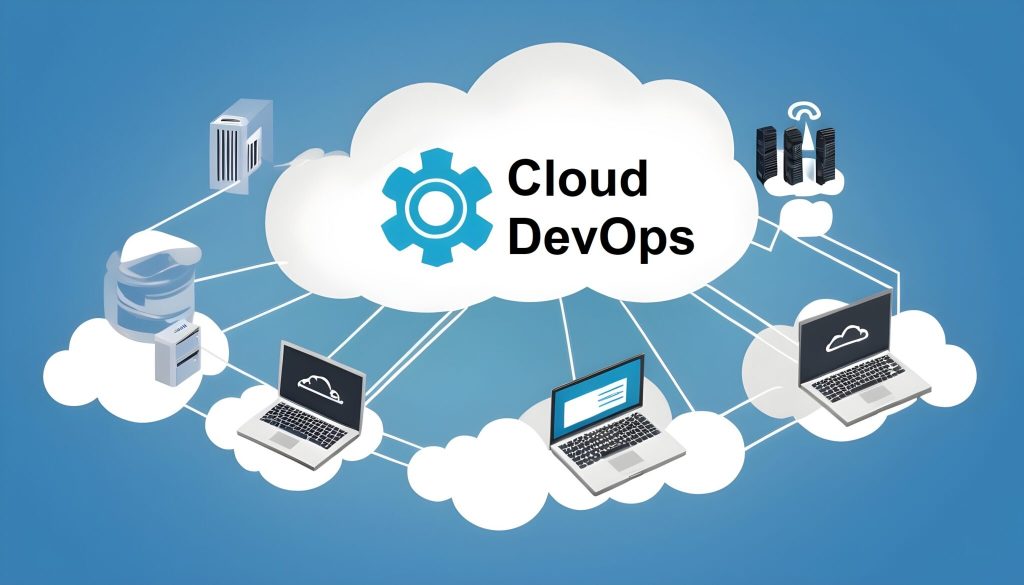
Cloud services configuration and cloud DevOps are essential components of modern IT infrastructure management, enabling organizations to efficiently deploy, manage, and scale their applications and services in cloud environments—key to achieving cloud optimization in dynamic workloads.
Cloud services configuration involves setting up and customizing cloud resources such as virtual machines, storage, databases, networking, and security policies to meet the specific requirements of an application or workload. This process often leverages Infrastructure as Code (IaC) tools like Terraform, AWS CloudFormation, or Azure Resource Manager templates to define and automate the provisioning of cloud infrastructure. By codifying infrastructure configurations, teams can ensure consistency, repeatability, and scalability while reducing manual errors and speeding up deployment times, all foundational to effective cloud optimization in our Cloud Strategy and Migration services at DolpTec.
Cloud DevOps, on the other hand, integrates development (Dev) and operations (Ops) processes in the cloud environment to streamline software delivery, improve collaboration, and enhance overall agility. Cloud DevOps practices such as continuous integration (CI), continuous delivery (CD), automated testing, and infrastructure automation are crucial for achieving rapid and reliable deployments in cloud environments. Tools like Jenkins, GitLab CI/CD, and Azure DevOps facilitate the automation of build, test, and deployment pipelines, enabling teams to release software updates more frequently and with higher quality—directly supporting cloud optimization through predictive AI integrations in our AI Implementation offerings.
Together, cloud services configuration and cloud DevOps enable organizations to achieve several benefits:
In summary, cloud services configuration and cloud DevOps play integral roles in modernizing IT operations, enabling organizations to achieve greater agility, efficiency, and consistency in the cloud-based environment through targeted cloud optimization. At DolpTec, we specialize in tailoring these approaches to your needs—whether configuring secure AWS setups or automating DevOps pipelines for AI workloads—to maximize performance and ROI.
Ready to elevate your cloud setup? Book a free consultation today to explore how our end-to-end cloud DevOps and cloud services configuration strategies can drive your cloud optimization goals.

Setting New Standards in
IT Transformation
© All Copyright 2026 by DolpTec